
 Image 1 of 2
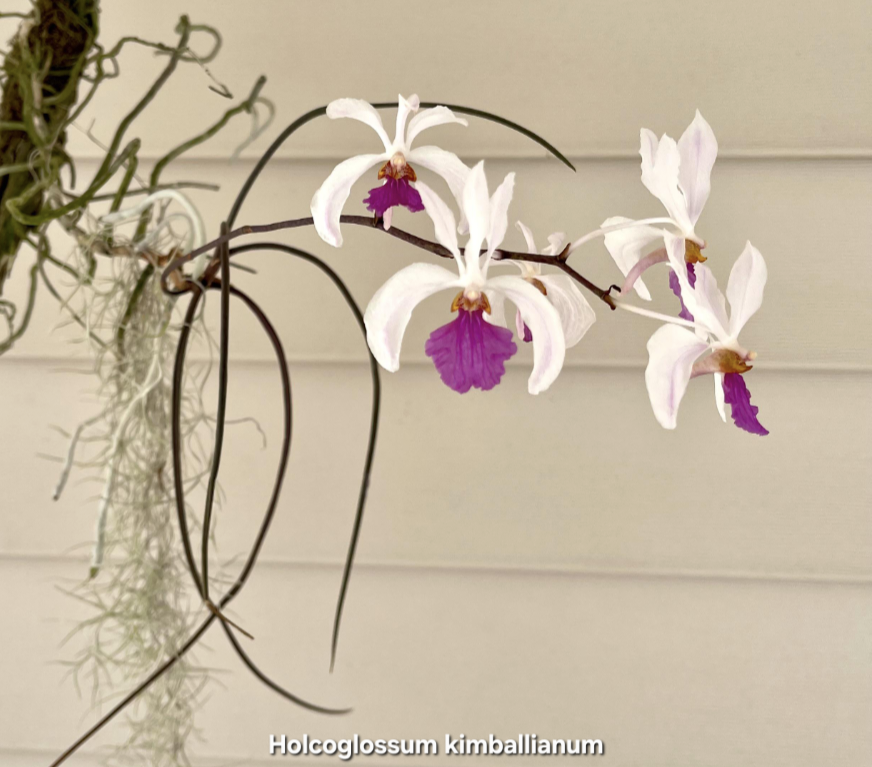 Image 2 of 2
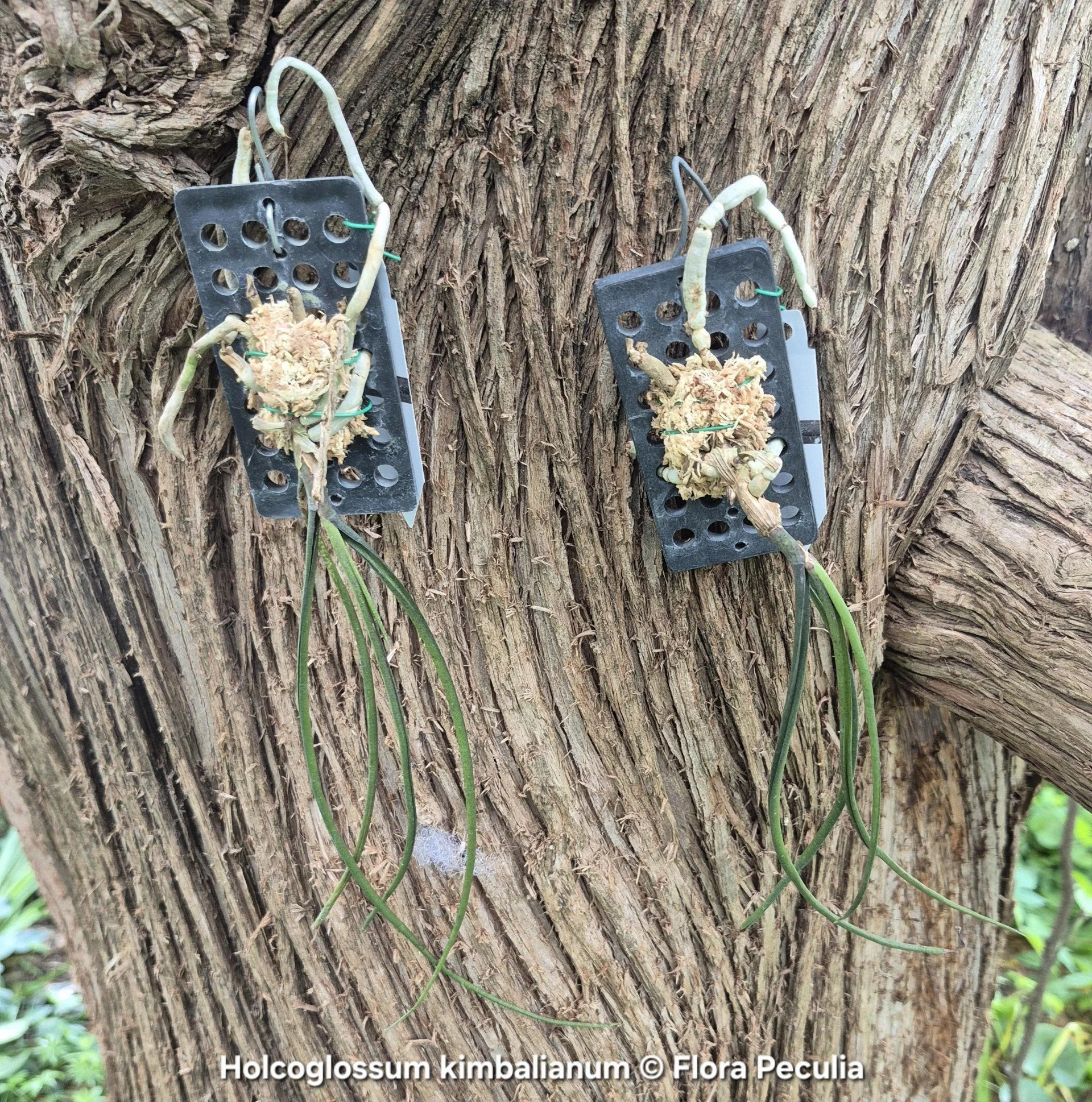
Holcoglossum kimballianum (synonym Vanda kimballiana) is a monopodial, epiphytic orchid native to Southeast Asia. It is characterized by slender, needle-like terete leaves that measure 6 to 8 inches (15 to 20 cm) in length, arranged along a stem in a ladder-like growth pattern that eventually branches into an open, shrubby form. During its summer and autumn blooming season, the orchid produces arching inflorescences that can carry up to 20 long-lasting flowers. Individual blooms measure 2 to 3 inches (5 to 7.5 cm) across and feature pure white sepals and petals, a purple-magenta lip with orange interior markings, and a distinct upper sepal that twists slightly forward.
Culturally, this species requires medium to bright indirect light and is highly adaptable to a broad temperature range, tolerating conditions from cool to warm (50°F to 90°F / 10°C to 33°C). Because its root system requires rapid drainage and must dry out completely between waterings, it is best grown mounted on cork or tree fern, or housed in open slat baskets. The plant requires regular watering every 1 to 2 days alongside light fertilization during its active spring and autumn growing phases, followed by a slightly drier, reduced watering schedule during its winter rest period.
Holcoglossum kimballianum (synonym Vanda kimballiana) is a monopodial, epiphytic orchid native to Southeast Asia. It is characterized by slender, needle-like terete leaves that measure 6 to 8 inches (15 to 20 cm) in length, arranged along a stem in a ladder-like growth pattern that eventually branches into an open, shrubby form. During its summer and autumn blooming season, the orchid produces arching inflorescences that can carry up to 20 long-lasting flowers. Individual blooms measure 2 to 3 inches (5 to 7.5 cm) across and feature pure white sepals and petals, a purple-magenta lip with orange interior markings, and a distinct upper sepal that twists slightly forward.
Culturally, this species requires medium to bright indirect light and is highly adaptable to a broad temperature range, tolerating conditions from cool to warm (50°F to 90°F / 10°C to 33°C). Because its root system requires rapid drainage and must dry out completely between waterings, it is best grown mounted on cork or tree fern, or housed in open slat baskets. The plant requires regular watering every 1 to 2 days alongside light fertilization during its active spring and autumn growing phases, followed by a slightly drier, reduced watering schedule during its winter rest period.